
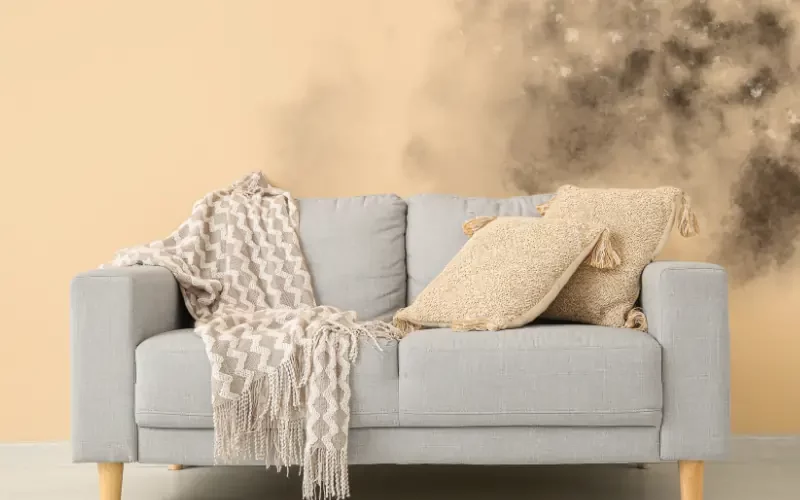
How to Sell a House With Mold in TX (Even With Major Issues)
It’s never a great feeling when you find mold in your house, especially if you’re trying to sell. Just know you’re not alone if you find yourself in this situation. Since Texas is prone to flooding and humidity, it is not uncommon for homeowners to face the challenge of selling a house with mold. It’s just frustrating to have to deal with that too. But before you get stressed out, you do have options that don’t involve spending a ton of money on remediation or dealing with picky buyers who run at the first sight of mold spores. You can easily work with cash home buyers in Denton or elsewhere in Texas, who understand the challenges you’re facing and can offer creative solutions.
As home buyers in Texas, we have a lot of experience helping homeowners sell properties with these very issues. If you found black mold in the bathroom or a large amount of mold growth throughout the house, there are legal ways to sell your property. Below, we’re going to walk you through everything you need to know about selling a moldy house in Texas.
Can You Legally Sell a House With Mold in Texas?
As long as you follow specific disclosure laws, you can legally sell a house with mold in Texas. You will need to fill out a disclosure statement that includes any known material defects, including mold issues. It’s required in Texas for sellers to do that, and if you hide any mold problems from potential buyers, you could face legal consequences later on.
To clarify, if you’re aware of mold in your property, you must disclose it. This includes any visible mold, previous mold problems that were treated, or any moisture issues that could lead to mold growth. The whole point of real estate disclosure laws in Texas is to protect buyers and also protect sellers who follow the legal requirements properly.
Many homeowners worry that disclosure means they can’t sell their home, but that’s not true. Buyers who work with traditional real estate agents might be scared off, but cash home buyers like us purchase properties with mold regularly. We factor the remediation costs into our offer, so you don’t have to worry about fixing anything before closing.
The “Health Hazard” Exit: Sell Without Stepping Inside
Mold can become a serious health hazard quickly, even preventing you from safely entering your home. Which creates a dilemma – how do you sell a house you can’t even walk through? It would be nearly impossible to sell if you’re planning a traditional real estate transaction. How can an agent show your home when it’s a health risk?
Instead, you probably should consider working with experienced cash home buyers. At Four 19 Properties, we can handle virtual assessments, and we’ll figure out a way to view your home safely if needed. We don’t want you to risk your health or spend money on professional mold remediation company services just to get your home ready to put on the market.
Having mold in the home may not seem like a big deal, but it can lead to homeowners having respiratory complications or asthma symptoms, which makes staying in the home dangerous. Mold is all too common after water damage from flooding or leaks in the roof. In some cases, an HOA may force you to sell when mold problems violate community standards or pose health risks to neighbors.
Whatever led to your mold problem, we don’t want you to have to choose between your health and your financial future.

How to Sell a Moldy House to Four 19 Properties (4 Steps)
1. Virtual or Masked Assessment (No Cleaning Required)
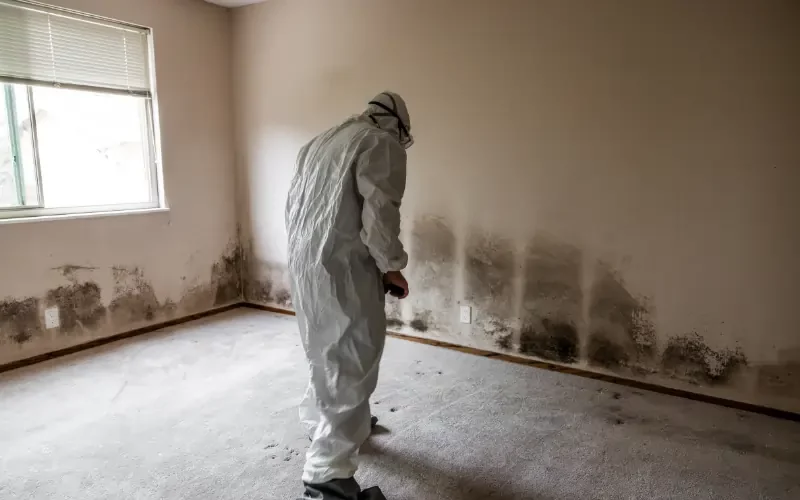
We start by running a full evaluation, keeping your safety in mind. If the mold situation interferes with us entering the home, we’re able to do most of our evaluation virtually using photos and video calls. But for properties that would require physical inspection, our team comes prepared with proper protective equipment.
Don’t worry about cleaning, removing, or treating any mold before we assess the home. It would help to see the property exactly as it is, including all the moisture issues, water leaks, and visible mold growth. This actually helps us give you the most accurate offer for your specific situation.
We’ve been doing this for over a decade now, so our team understands how to evaluate properties with environmental factors like high humidity levels and poor air quality. Selling a house with water damage that also has mold growth isn’t easy. Prospective buyers get stuck on the fact that there is mold in the house, but we look beyond that. We’re going to check things like structural damage, water intrusion points, and the overall scope of remediation needed.
2. We Estimate Remediation Costs (You Pay $0)
After our assessment, we calculate the full cost of professional remediation. This includes everything from mold testing and mold inspection to the complete remediation process. We factor in costs for HEPA vacuum cleaning, negative air pressure systems, and replacement of porous materials like drywall that can’t be saved.
Texas climate conditions often require extensive work to address humidity measurements and moisture sources. We account for all of this in our calculations, and for things like dehumidifier installation, HVAC systems cleaning, and waterproofing measures.
These are all of the perks of using us to sell your home. We will eat the remediation costs and handle the entire process after closing. This frees you from the financial burden and stress of managing contractors and mold remediation specialists yourself.
3. Receive a Cash Offer for the Home “As-Is.”
Using our assessment and estimates for remediation, we will make you a fair cash offer for your property in as-is condition. Just so you know – our offers take into account the current home value minus necessary repairs and remediation costs. We pride ourselves on being entirely transparent about our offers and would be more than happy to explain how we arrived at that number.
To clarify, cash offers mean no financing contingencies or lender requirements. Since lenders typically won’t approve loans for properties with active mold, cash transactions often provide the only realistic path to closing quickly.
You’ll receive your offer within 24-48 hours of our assessment, which shows your property’s true value despite mold issues. There’s no pressure or obligation to accept, and we encourage you to consider all your options. However, most homeowners find our cash offers competitive when they factor in the time, stress, and money saved by avoiding listing with a realtor.
4. Close Fast and Avoid Liability Claims
We can close in as little as 7-14 days, depending on your timeline preferences. Our streamlined closing process eliminates many of the complications that arise in traditional real estate transactions involving mold.
When you sell to us, you’re protected from future liability claims. Since we purchase the property knowing about all mold issues, you won’t face lawsuits from buyers who claim they weren’t properly informed about the home’s condition.
Fast closing also means you can move on with your life quickly. Whether you need to relocate for health reasons or simply want to escape a stressful situation, we make the closing process as smooth as possible.

Fill Out The Form Below And Sell Your House with Mold Damage In One Simple Step
The High Cost of Professional Remediation in Texas
If you’re on the fence about what to do, it would probably help to understand how much professional mold remediation would cost. The cost for professional mold remediation in Texas typically ranges from $10,000 to $30,000 for moderate cases. When selling a house with water damage as the underlying moisture problem, more extensive repairs will likely be required. If you’re dealing with a sizable mold problem, it could cost $50,000 or more to properly treat. These amounts typically include mold removal, replacement of damaged materials, air quality testing, and clearance certificates.
The cost is pretty high because the remediation process involves multiple steps. First, the mold remediation specialists run mold testing to identify all affected areas and mold strains present. Then they isolate contaminated areas using negative air pressure systems and remove all porous materials that cannot be cleaned, including drywall, insulation, and flooring.
After removal, specialists clean all surfaces using specialized techniques. Some use bleach solutions, while others prefer hydrogen peroxide or other approved cleaning agents. The process concludes with air quality tests to ensure mold spore counts meet safety standards.
Many homeowners underestimate the scope of work required and think it can be a DIY project. But what looks like a small mold problem often is an iceberg of larger moisture issues behind walls or under flooring. Plus, most homeowners don’t have the right equipment to handle this. Professional inspectors use moisture meters and infrared cameras to identify hidden water damage that will need to be addressed during remediation.
Texas Law: The “Certificate of Mold Damage Remediation” (CMDR)
If mold remediation is done by a licensed professional, the Certificate of Mold Damage Remediation (CMDR) is required by Texas law to be issued by the contractor upon completion. This certificate also shows that the work was done following state and industry standards usually set by IICRC (Institute of Inspection, Cleaning and Restoration Certification).
To get the certificate, your home goes through several inspections and air quality tests during the remediation process. You can’t apply for this certificate on your own; only licensed mold remediation companies can issue these certificates after proper mold removal techniques are completed.
Buyers and lenders commonly ask to see this certificate if you’ve had mold remediation done in the past on a home you’re selling. Without proper documentation, you may face challenges even if the mold problem was properly treated. This is another reason why many homeowners choose to sell as-is rather than trying to do a DIY remediation themselves.
Why Banks Won’t Lend on Homes with Active Mold
Lenders don’t look highly on active mold. They consider it a significant risk factor that affects both the property value and the borrower’s ability to maintain the home. Most conventional loans, FHA loans, and VA loans require that properties meet minimum health and safety standards. Having active mold typically fails these “health and safety” requirements.
Think about it from the lender’s point of view – mold is both an immediate health risk and a potential structural integrity issue. Mold is a sign of ongoing moisture problems that could cause foundation damage, wood rot, or other expensive repairs. The bank is not in the business of financing properties that might lose value or worse become uninhabitable.
Even when mold is disclosed, it’s a tough one for appraisers to give an accurate property value. This, in turn, makes lenders uncomfortable, leading them to require complete remediation before approving financing. This creates a catch-22 for sellers who can’t afford remediation but need to sell.
Cash buyers provide the solution to this lending problem. Since we don’t rely on traditional financing, we can close on properties that banks won’t touch. This opens up opportunities for sellers who might otherwise be stuck with unsellable properties.
Frequently Asked Questions About Selling with Mold
Does homeowners’ insurance cover mold remediation?
Mold coverage is usually not included in most standard homeowners’ insurance policies, unless it results from a covered peril like sudden water damage from burst pipes. But if the mold was caused by gradual water damage, humidity, and/or flooding, it typically isn’t covered. Some insurance companies offer a separate mold coverage add-on to your policy, but coverage limits are often low compared to the actual remediation cost.
If your mold problem resulted from a covered incident, make sure to document everything carefully and file claims promptly. However, don’t count on insurance to cover your remediation costs. What usually ends up happening is that homeowners discover their coverage limitations only after mold problems develop.
Can I become liable if the buyer gets sick later?
As long as you provide proper disclosure in the beginning, you should be protected from most liability claims. If you honestly disclose all known mold issues and follow Texas legal disclosure requirements, buyers assume the risk when they purchase your property. But if you hid known problems or gave false information, you could face serious legal consequences.
If you have questions about the disclosure process, we’d recommend working with an attorney. Plus, they can help verify your disclosures, meet all legal requirements, and protect your interests. Even if it is an extra expense, it will give you peace of mind.
Is It Harmful to Live in a House with Visible Mold?
Mold exposure can be both harmful to people with pre-existing conditions like asthma and those without. Respiratory complications are quite common for people who have had prolonged mold exposure.
Any mold growth indoors should be treated as a big deal, but black mold is the one that can produce toxins that can cause severe health effects.
If you’re noticing some health symptoms related to mold, it’s best to get out of that environment temporarily. That way, you can treat the problem without it impacting your health.
If you’re living in mold, the best thing you can do is treat it as a potential health hazard until you can get proper testing and remediation done.
Conclusion
Most people expect selling a house with mold in Texas to be a nightmare, but it doesn’t have to be. Yes, traditional sales methods do create some obstacles and expenses. But working with experienced cash home buyers like us can provide an easier path to sell a flooded house in Arlington with mold. We will handle all of the involvement, cost, and risk of remediation, all while giving you a fair price for your property.
Whatever your situation looks like, whether you’re dealing with minor mildew issues or major structural damage from water intrusion, we buy houses in Arlington and throughout Texas in any condition. Our simple home buying process is meant to protect your health, your finances, and your future.
You can find a lot of information about us and our experience with challenging property situations on our website. If you’re ready to learn more about getting a cash offer for your moldy property, contact Four 19 Properties today. We’ll provide a free assessment and cash offer with no obligation. Let us turn your mold problem into a solved problem, so you can move forward with confidence.
Get Your Free, No-Obligation Cash Offer!
Don’t wait anymore. Fill out the form below and join the growing number of homeowners who have sold their house mold with us in the most simple and stress-free way.
At Four 19 Properties, we buy houses in Texas for cash and in any condition. Whether the property has mold or you are dealing with another difficult situation, our team is ready to help. If selling your house fast is the goal, Four 19 Properties can make a fair cash offer and close on your timeline. Call today to learn more at (817) 754-1957.