
Squatters Rights In Texas: What to Know When Selling Your House
What are Squatter’s Rights in Texas?
In Texas, a squatter generally has no legal right to your property unless they have lived there for 10 years (Adverse Possession) or 3 years with a “Color of Title.” However, under the new SB 1333, property owners can now request the immediate removal of unauthorized occupants by filing a sworn affidavit with local law enforcement, bypassing the traditional eviction timeline.
Let’s say you’ve owned a home for several years and were using it as a rental. It’s been sitting empty for the last six months, so you’ve decided it’s time to sell your vacant property. You drive by over the weekend to make sure it’s presentable before you put it on the market and take listing photos. But as you pull up to the home, you find a car in the driveway and toys in the front yard. You suddenly realize your home has been taken over by squatters.
Unfortunately, this happens a lot in Texas, and if it’s currently happening to you, it’s important to understand squatters’ rights so you can protect your investment. Figuring out what your next steps should be when it comes to unauthorized occupants can save you both time and money.
As home buyers in Texas ourselves, we, too, have experienced firsthand squatter situations that completely derailed property sales. So the goal of this content is to help you get through these challenges with confidence and understand what you can and cannot do with these unwelcome guests.
What Exactly Defines a Squatter in Texas?
Think of a squatter as someone who lives on your property without your permission. They don’t have a lease agreement with you or any legal right to be there. This isn’t like tenants who have a legitimate rental agreement; squatters don’t have a legal agreement with the property owner. Squatters usually target vacant property or abandoned buildings. They don’t get permission to move in and will oftentimes make themselves at home by changing the locks or making improvements. These steps to make the house their own can actually strengthen their legal position.
How Texas laws define squatters is very different from other unauthorized occupants. They have to show specific behaviors and meet certain criteria to potentially claim any rights to your property. The key difference is in their intent to claim ownership rather than simply seeking temporary shelter.
Squatters vs. Trespassers: Why the Legal Distinction Matters
It’s important for property owners to know the difference between a squatter vs. a trespasser. Think of a trespasser as someone who enters your property without your permission and doesn’t plan to stay or claim ownership. Some examples of a trespasser include someone who is cutting through your land or is temporarily seeking shelter from the weather.
Squatters are different because they show intentions to stay and possibly try to claim the property for themselves by way of what’s called adverse possession. They will act like they own the property by maintaining it, paying the property taxes, and making improvements. Because they are essentially acting like the owners, law enforcement, and the courts have to handle the removal process.
With trespassing violations, those can be handled quickly through criminal penalties, but squatter situations, on the other hand, require more lengthy legal procedures. Texas law does recognize the difference between the two, which is why if you’re a property owner, you need to act quickly if you discover unauthorized occupants on your property.
How Long Before a Person Is Considered a Squatter in Texas?
There isn’t a precise timeframe for when someone is considered a squatter versus a trespasser in Texas. However, the duration of occupancy is a big deal in determining their legal status and potential claims to the property.
Fortunately, for a squatter to claim they own your land, they usually have to occupy it for at least 10 years. However, this time is cut down to just three years if they have ‘color of title.’
Color of Title means the person has a piece of paper that looks like it gives them ownership, even if that paper turns out to be worthless or legally wrong. Common examples include:
- A Mistake in a Will: They ‘inherited’ the property through a will, but it turns out the deceased person didn’t actually have the right to give it away.
- Bad Paperwork: A deed that was filed with the county but has a typo in the description or a missing signature.
- Tax Sale Documents: Papers showing they bought the property at a government tax sale, even if that sale technically wasn’t done correctly.
The longer someone remains on your property without challenge, the stronger their potential legal position becomes. This is why immediate action is critical when you discover unauthorized occupants on your Texas property.
What Is Adverse Possession and How Does It Work in Texas?
Adverse possession is a legal doctrine that allows squatters to potentially gain ownership of property under specific conditions. In Texas, adverse possession claims must meet several strict requirements outlined in the Texas Property Code.
The squatter must demonstrate Open & Notorious possession, meaning their occupancy is visible and obvious to anyone, including the rightful owner. They must also show Hostile Claim, indicating they’re occupying the property against the owner’s interests, not with permission.
Additionally, the possession must be continuous and exclusive for the required timeframe. The squatter cannot share the property with the legal owner or abandon it for extended periods. If they hold color of title, they may need only three years of continuous possession rather than the standard 10-year requirement.
Can You Legally Remove a Squatter from Your Property Without a Lawyer?
As a property owner, you might feel compelled to take matters into your own hands, but self-help evictions are strictly prohibited in Texas. Tactics that seem logical—like changing locks, cutting off water or electricity, or physically removing occupants—are not ok and can land you in legal trouble.
Instead, you must follow the formal statutory process. This starts with serving a proper Notice to Vacate. If the squatter refuses to leave, you cannot simply force them out; you must file a Forcible Detainer Suit in the local justice court. This is the specific legal action required in Texas to determine who has the superior right to immediate possession of the property.
Situations can get murky quickly if squatters claim tenant rights or produce falsified documents (like a forged deed). Before taking action, it is highly recommended to consult a real estate attorney. They can navigate the specific requirements of a Forcible Detainer Suit to ensure you regain possession without accidentally violating the squatter’s rights.
How SB 1333 and SB 38 Changed Texas Squatter Laws in 2026
Recently, some laws changed for property owners in Texas that help with the growing squatting crisis we’ve been experiencing. Two that you’ll want to become familiar with are SB 1333 and SB 38.
- SB 1333 (The Squatter Removal Act): Made the criminal penalties stronger for unauthorized occupants and allows for immediate removal via sworn complaint.
- SB 38 (Eviction Reform): Helped clear up unique occupancy situations and strictly limits the time judges can delay eviction cases, creating a “rocket docket” for property owners.
Fortunately, both of these laws are supported by local organizations like the Texas Public Policy Foundation and Governor Abbott, and show a shift toward protecting property rights.
Can the Police Remove Squatters in Texas Immediately?
For law enforcement officers to remove squatters immediately depends on a couple of different things. If the squatters are considered trespassers or are committing criminal trespass, then police officers can arrest them on the spot.
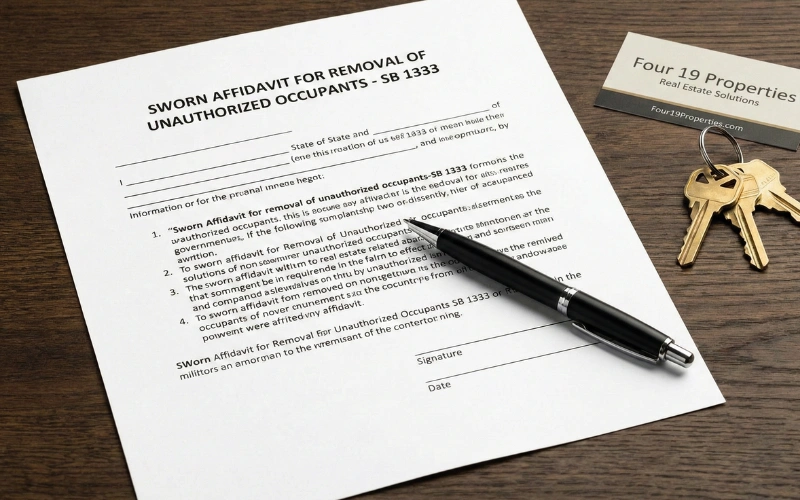
Under the new SB 1333 (effective Sept 2025), you no longer need a court order to remove a squatter who presents a fake lease. You can now file a ‘Sworn Complaint’ directly with the Sheriff. If the occupant cannot prove they are a valid tenant (or family member), the Sheriff has the authority to remove them immediately, bypassing the months-long eviction court process.
Fortunately, recent changes in squatter laws have given law enforcement officers more authority to act quickly. But the eviction process still requires going through all the official steps, like civil courts, before they get involved.
Preventive Measures: How to Protect Your Vacant Texas Property
Prevention remains the best strategy for avoiding squatter situations. Installing security systems and security cameras can deter unauthorized entry and provide evidence if problems arise. Regular property inspections help identify issues before they become entrenched.
Consider hiring a property management company to monitor vacant properties, especially in high-risk areas like Houston and Dallas. They can coordinate regular maintenance, handle debris removal, and ensure the property appears occupied and maintained.
Physical barriers like proper fencing and secure locks also help prevent initial entry. Some landlords install motion-activated lighting and post clear criminal trespass notices to establish boundaries and provide legal grounds for removal.
Why Selling Your Property for Cash Is the Easiest Way to Handle a Squatter
Dealing with squatter issues is tough when you’re trying to sell the house. What ends up happening for property owners is that they figure out that traditional selling methods are really complicated. Often, real estate agents have a hard time marketing the property with unauthorized occupants, and prospective buyers will avoid putting themselves in that situation.
Fortunately, if you’re personally dealing with this situation, cash home buyers in Fort Worth and throughout Texas specialize in purchasing properties with existing challenges, including squatter situations. Buying squatter houses is actually one of our specialties here at Four 19 Properties. Our entire home buying process is really simple. We start with a free evaluation of the property’s condition and circumstances, then make a fair cash offer regardless of unwelcome house guests.
Our timeline is totally different from traditional sales that can take months and require a clear title. Since we buy houses with cash, we can close quickly, often within days. This speed is really a big deal when dealing with squatters who might be strengthening their legal position with each passing day. We will also handle all the legal complexities, including coordinating with attorneys and managing the eviction process if needed.
And if you’re struggling to sell a home with termite damage, having a hard time selling a house with water damage, or dealing with squatter complications, cash buyers are the way to go.
Conclusion
The best way to handle squatter’s rights in Texas is to make a point to learn more about some of the complex laws and to act quickly to protect your home. Even with recent legislation of SB 1333 and SB38 that have strengthened property owner rights, the legal process is still a challenge and is time-consuming.
So instead of struggling with lengthy eviction procedures, court hearings, and uncertain outcomes, many Texas property owners choose to get a free cash offer from experienced buyers who handle these complications professionally. We buy houses in Dallas and throughout Texas, providing property owners with a fast, reliable solution that eliminates the stress and uncertainty of traditional sales methods.
If you’re dealing with unauthorized occupants or simply want to avoid potential squatter issues entirely, contact us today to learn how to get rid of squatters in Texas through a quick, cash sale that puts money in your pocket without the legal headaches.
Popular Posts