
Can you sell a house in poor condition in Texas?
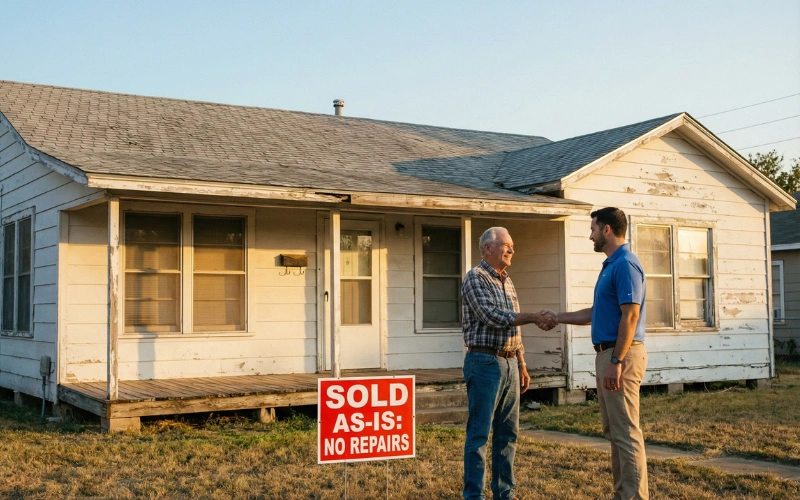
Yes. Texas law allows homeowners to sell a property “As-Is” without making repairs, provided they complete a strictly honest Seller’s Disclosure Notice. However, because traditional lenders (FHA/VA) often refuse to finance homes with structural or roof damage, the fastest way to sell a distressed property is often to a cash buyer who is not bound by bank inspection requirements.
If your Texas property has seen better days and has years of wear and tear, selling using the traditional real estate route can be tough. Maybe you have foundation issues, water damage, or just years of delayed maintenance you haven’t had time or money to address. Whatever the case may be, finding the right approach to offload a property in this condition doesn’t have to dip into your savings or take months to figure out.
As local cash home buyers in the area, we get that life happens. Job relocations, financial pressures, or inherited properties can leave homeowners putting housework on the back burner.
Fortunately, you do have more options than you might think. While it is pretty common for real estate agents to push expensive repairs and upgrades to make your home attractive to buyers, you can go about it a different way and skip all of the work and months of renovation projects. We’ve actually been able to help countless Texas homeowners through this tricky situation without the traditional hassles. Below, we’re going to lay out all of the information so you can make the best decision for your situation.
Can You Legally Sell a House “As-Is” in Texas? (The Rules)
The best place to start is to consider the option of selling your house “As-Is.” This can be a great option if your home needs a lot of work and you don’t want to deal with the repair process, or if you need to sell quickly. Fortunately, Texas law does allow you to sell real estate in its current condition without you having to make any repairs.
You will need to clearly state that you’re selling “As-Is,” which protects sellers from warranty claims, but it doesn’t mean you can avoid filling out a disclosure. The Texas Property Code requires a Seller’s Disclosure Notice, which is an honest report that shares any known defects, structural problems, and material issues to the next homeowner.
The disclosure requirements cover things like: foundation concerns, roof damage, plumbing defects, electrical problems, and any history of water leaks or termite activity. If you don’t disclose any known issues, you can be held legally liable, even in “As-Is” sale situations—so it’s a big deal. But to give you some peace of mind, you’re not required to hire contractors for pre-listing inspections or to fix cosmetic issues that don’t affect safety.
The “FHA Trap”: Why Most Buyers Can’t Finance a Fixer-Upper
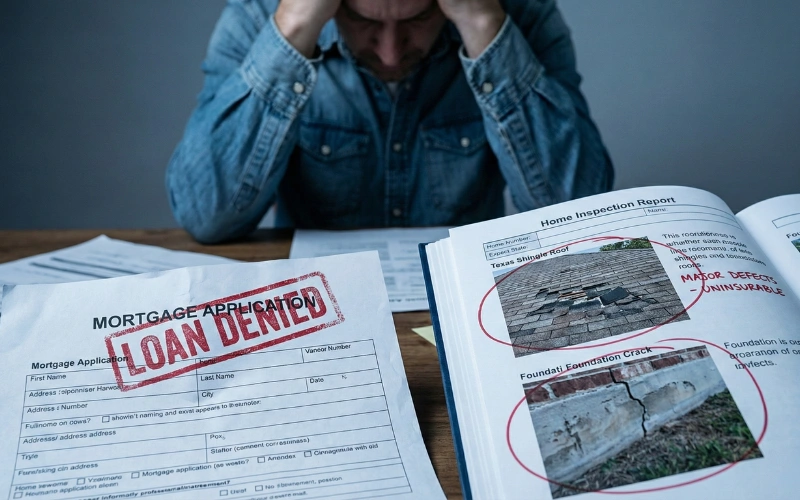
As you’ve learned, selling as-is is totally possible, but there is a bit of a challenge with that. When trying to sell a damaged home, most conventional financing programs won’t approve loans for properties with major issues. For example, FHA loans require properties to meet certain habitability standards, so if your house has structural issues, major plumbing problems, or roof damage, FHA lenders will request repairs before closing.
This is a big deal because nearly 15% of all mortgage loans are FHA-backed. This creates what we call the “FHA Trap”: your property attracts interested buyers, but they end up not being able to secure financing. It doesn’t matter if the buyer loves the house; if the appraiser flags a peeling roof or a crack in the wall, the bank kills the deal 3 days before closing.
The truth of the matter is that most traditional home buyers simply can’t purchase houses with significant repair needs, regardless of how low you drop the asking price.
The “Uninsurable” Risk: Why Old Roofs Kill Deals
In Texas right now, there is a hidden threat that is killing more real estate deals than anything else: Homeowners Insurance.
Insurance companies in Texas have become incredibly strict. If your roof is over 15 years old, many Texas insurers will flat-out refuse to write a new policy on the home. If a buyer cannot get insurance, they cannot get a mortgage.
This leaves you in a difficult position where you are unable to sell to anyone, relying on a bank loan. In these cases, you are often left with only one viable option: selling to a cash buyer who self-insures and assumes the risk of the roof replacement themselves.
Foundation & Roof: Which Repairs Are Mandatory for a Retail Sale?
In any market, not just in the Texas real estate market, foundation and roofing problems are the biggest hurdle to securing traditional financing. Foundation problems are concerning not only for potential buyers but also for lenders. It’s hard to get financing for a property that the bank may consider a risky investment.
If there is visible settling, cracked walls, doors that won’t close properly, or uneven floors, it’s going to be a challenge to sell. Those just represent dollar signs to potential buyers. For reference, professional foundation repairs in major Texas cities usually cost between $15,000 and $40,000 as of February 2026.
Unfortunately, roofing isn’t any better. Missing shingles, visible leaks, or structural roof concerns will put a halt to getting a conventional loan. The expensive reality is this: mandatory repairs for retail sales often exceed $50,000 in older Texas homes, and there’s no guarantee you’ll recover these costs in your selling price.
The Real Cost of Renovating: Will You Get Your Money Back?
Renovation costs are not cheap in Texas. Due to labor shortages and material costs, everything is impacted, from basic plumbing repairs to complete home improvements. And the reality is that home repairs only return about 60-80% of their cost in added property value. You shouldn’t count on major systems like HVAC, electrical, and plumbing to add a ton of value, because buyers expect these systems to work properly and come standard.
Besides the actual labor and materials, there are hidden costs you’ll need to consider as well, like permits, contractor delays, inspection fees, and holding costs while the work is being done. The harsh reality for homeowners after they’ve invested all of this time, money, and effort is that their renovated property doesn’t end up commanding the premium they expected.
Texas Seller Disclosures: What Happens If You Hide Defects?
If you think you can get by without telling the next homeowner about the known issues you’re aware of, think again. Texas disclosure laws are pretty serious and carry significant consequences for sellers who attempt to hide known defects. So in the Seller’s Disclosure Notice, you’ll need to be honest about the condition of things and if there are any foundation issues, water damage, mold, termite activity, and any other material problems that you have knowledge of.
There is no need to stress about this; proper disclosure won’t doom your home sale, it’s meant to protect you legally while attracting only serious offers. Being honest from the start about the fact that you’re selling a house with water damage or mold isn’t a bad thing. Honest disclosure combined with appropriate pricing will attract serious buyers like investors who specialize in these situations.
Listing vs. Cash Offer: Avoiding the “Option Period” Renegotiation
Something else you’ll want to be aware of with traditional Texas real estate contracts is the “Option Period.” This period allows buyers to request repairs or renegotiate terms after they complete inspections.
Even if you’re selling your house in “As-Is” condition, it’s not uncommon for a potential buyer to still have a home inspection completed. When selling distressed properties, this often becomes a painful renegotiation where buyers demand $20,000 in repair credits or threaten to walk away from the deal entirely.
Fortunately, cash offers remove this uncertainty. As experienced cash home buyers, we conduct our due diligence upfront and commit to firm purchase prices without repair contingencies. We’re not at the mercy of the banks since we use cash to close. This also means we can close much faster—typically within 7-14 days compared to 30-60 days for a conventional sale.
Why Four 19 Properties Buys Houses Even with Structural Damage
At Four 19 Properties, it was really important for us to build our business around helping Texas homeowners who face challenging property situations. So it doesn’t matter if you’re selling a distressed property or dealing with foundation failure, we made it our mission to provide easy solutions without the complications of traditional sales.
We’d love to be able to help with whatever situation you’re going through. We’re just a husband and wife duo with a special team we’ve put together to create Four 19 Properties. We are local, so we buy houses in Dallas, small cities like Watauga, and throughout Texas, in any condition. Since we’ve been doing this for a while, our team understands renovation costs and market values, which really helps us make fair offers that reflect realistic property values without requiring sellers to invest in expensive repairs.
Our home buying process removes many traditional selling hassles: no realtor fees, no lengthy market exposure, no repair negotiations, and no financing contingencies that can derail transactions. Most importantly, we provide certainty. When you get a cash offer from Four 19 Properties, you know exactly what you’ll receive and when you’ll close.
Conclusion
Selling your home in poor condition in Texas requires understanding both legal requirements with disclosures and the realities of finding the perfect buyer. While you can legally sell as-is, financing restrictions, renovation costs, and disclosure obligations create significant challenges for traditional sales approaches.
The smartest strategy often involves working with experienced cash buyers who specialize in distressed properties rather than investing time and money in expensive repairs that may not increase your net proceeds.
When you need a cash offer that provides certainty and eliminates typical selling complications, Four 19 Properties offers a proven alternative to conventional real estate transactions.